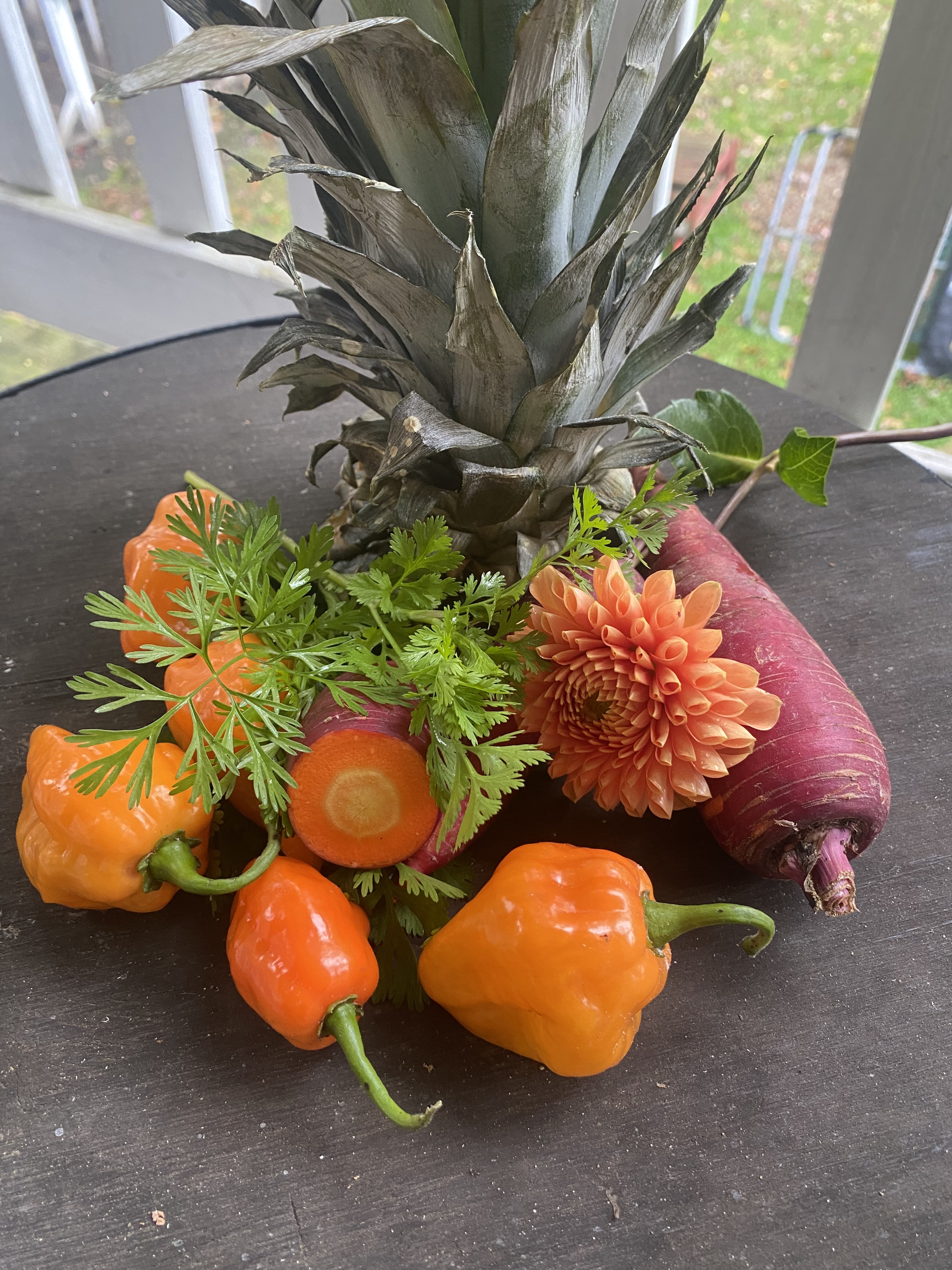
Fresh habanero, dragon carrot, and cilantro
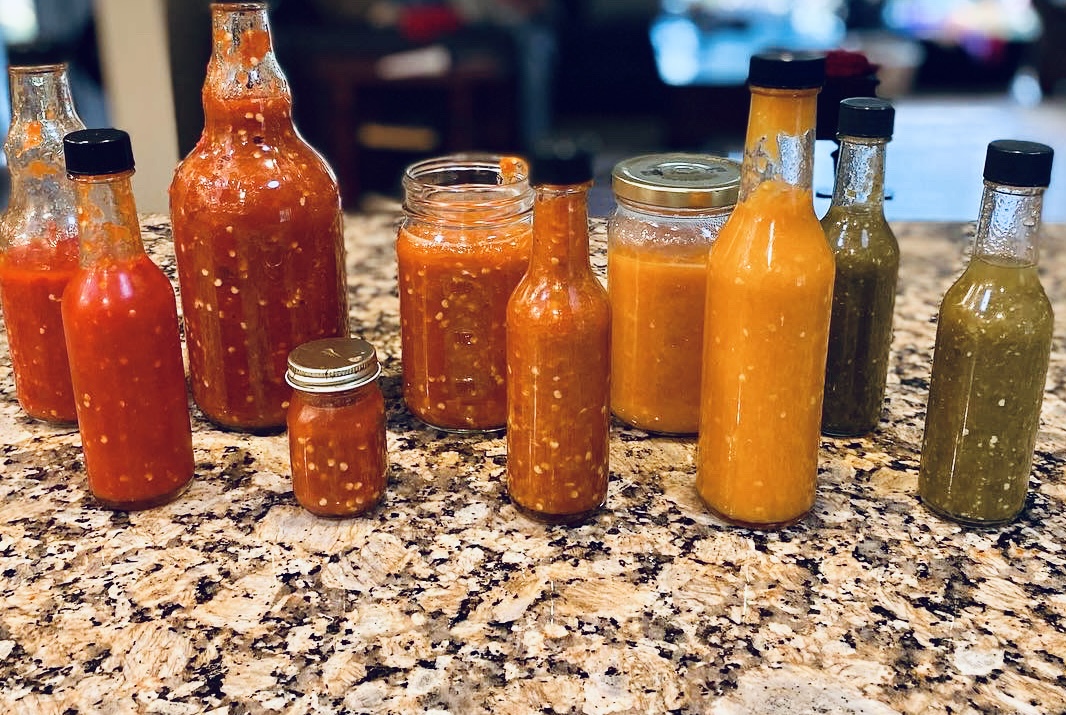
I love hot sauce. My whole family loves hot sauce, actually.
Its so easy and delicious. Plus, its all fresh grown from the garden. Except the tequila. But, I’ll leave that to the experts.
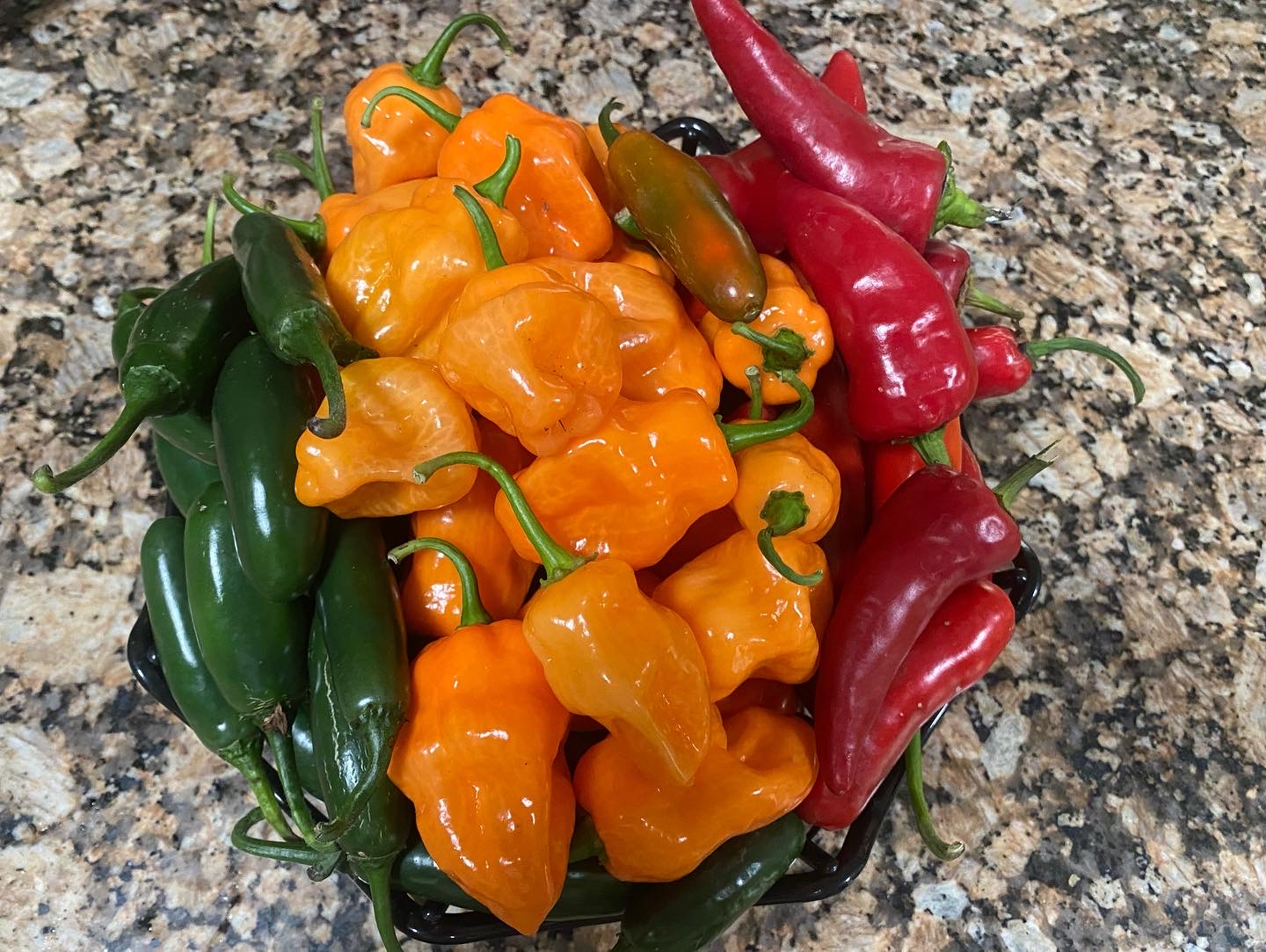
When I first decided to try making our own sauce, I wasn’t really sure which peppers to grow. I had been growing jalapenos for few years, but I really wanted to expand my horizons. My personal preferences is always a lot of spice with a side of sweet.
The first year I set out to try it, I opened up Johnny’s seed catalogue and picked out a few peppers that sounded like they should go in hot sauce, plus maybe a few others.
I chose the Helios variety of habanero because it is early to ripen and has good yields in the North where our growing seasons are pretty short. I have grown it for a couple years now and it is always my last pepper to ripen. I grow all of my peppers in my greenhouse. I have found that my pepper yields are much greater with the extra heat that the greenhouse can provide. But I know many growers in my area that have no problem growing them outside.
The plants grow fairly compact and are quite prolific. You can staking them to prevent the branches from falling over when they are full of peppers. And they do get quite full.

My hot sauce is fermented. I love how the process brings out the best of the flavors. The longer you ferment them, the more flavor you get. Fermented foods have also been known to help increase beneficial gut bacteria and help grow a healthy gut microbiome.
To ferment the ingredients: Wash your peppers and chop them up.
*I highly recommend wearing gloves, the capsaicin in the pepper can last on your hands for weeks. I have made the mistake of not wearing gloves, only to have my entire face and hands tingle for weeks.
Put the chopped peppers in a mason jar and cover them with brine. Pretty easy right!?! When you close the top of the jar, removing the oxygen, the peppers begin to ferment. Every few days, open the lid and let the air out – a process called burping- and then screw it back on for more fermentation.
I usually have my peppers sit for at least 2 weeks.
To make the brine:
I used 1 tablespoon of Kosher salt to 1 cup of water.
For this wide mouth Mason jar, I mixed around 2 tablespoons of salt to 2 cups of water.
Make sure the brine is covering all the vegetables on the top so that you don’t get mold.

The ingredients:
You can use anything you want!
One of my tricks – look at the ingredients list on one of your favorite hot sauces!
What I use:
Habaneros rough chopped Pineapple- I use 1/4 of the jar, vs. 2/3 peppers, Carrots – just a few, Cilantro (usually I wait til after fermentation)
After two weeks of burping, you will see some white stuff starting to show up. Don’t worry, this is just Kahm yeast which is not dangerous. If you see red, black, or pink – throw it away, that is mold and you do not want that.
Once my jar is done fermenting. I pour the mix into a strainer making sure to save the brine. I blend up the pepper mix adding any other ingredients I want to include. For me, I like to add cilantro and tequila – just a little of each adds a lot of flavor.
In the blender add 1/2 cup of white wine vinegar and 1/2 cup of brine Mix in the blender.
* You can definitely use other types of vinegar, many people use distilled white vinegar or apple cider vinegar, its really your preference. I have found white wine to have a smoother finish.
*You can also change up your brine to vinegar ratio, more brine makes it saltier. While more vinegar makes it more acidic.
Once your ingredients are blended smooth, put them in a pot and boil. This step stops the fermentation process.
At this point, most people strain out the liquid and put it in their bottle and are done. I personally prefer my sauce a little thicker and bottle it as is. Depending on the type of pepper, this may leave some skin residue that can get clumped in the bottle. I have found that the habaneros do not do this. If you do not want to keep your sauce that thick, but prefer a pure liquid, but thicker sauce there are alternatives, such as cornstarch and water, pectin, or xanthum gum – which you will see on the ingredients of most store bought hot sauces.
The best part of hot sauce is that you can experiment. Try different peppers. Remove the seeds, don’t. Add different ingredients – do you love garlic? Add it. Maple syrup? Go for it.
I hope you enjoy this sauce. It is delicious on just about anything from eggs, to tacos. Let me know if you have other substitutions that you have tried that work!


 Three Monkies Farm
Leave a comment